Product updateJune 24, 2026
Kode Dot Production Update: First Assembled PCBs Off the Line
Kode Dot is a pocket-size, open-source device for makers, hackers and geeks: a handheld you can program, extend with modules and use to talk to the electronics around you. After a funded Kickstarter campaign, it is moving through production.
Every hardware project has a moment when it stops being files sent to a factory and starts being objects on a table. This is that moment: the first assembled Kode Dot PCBs came off the line, and we got to hold them.
The Antenna PCB is assembled
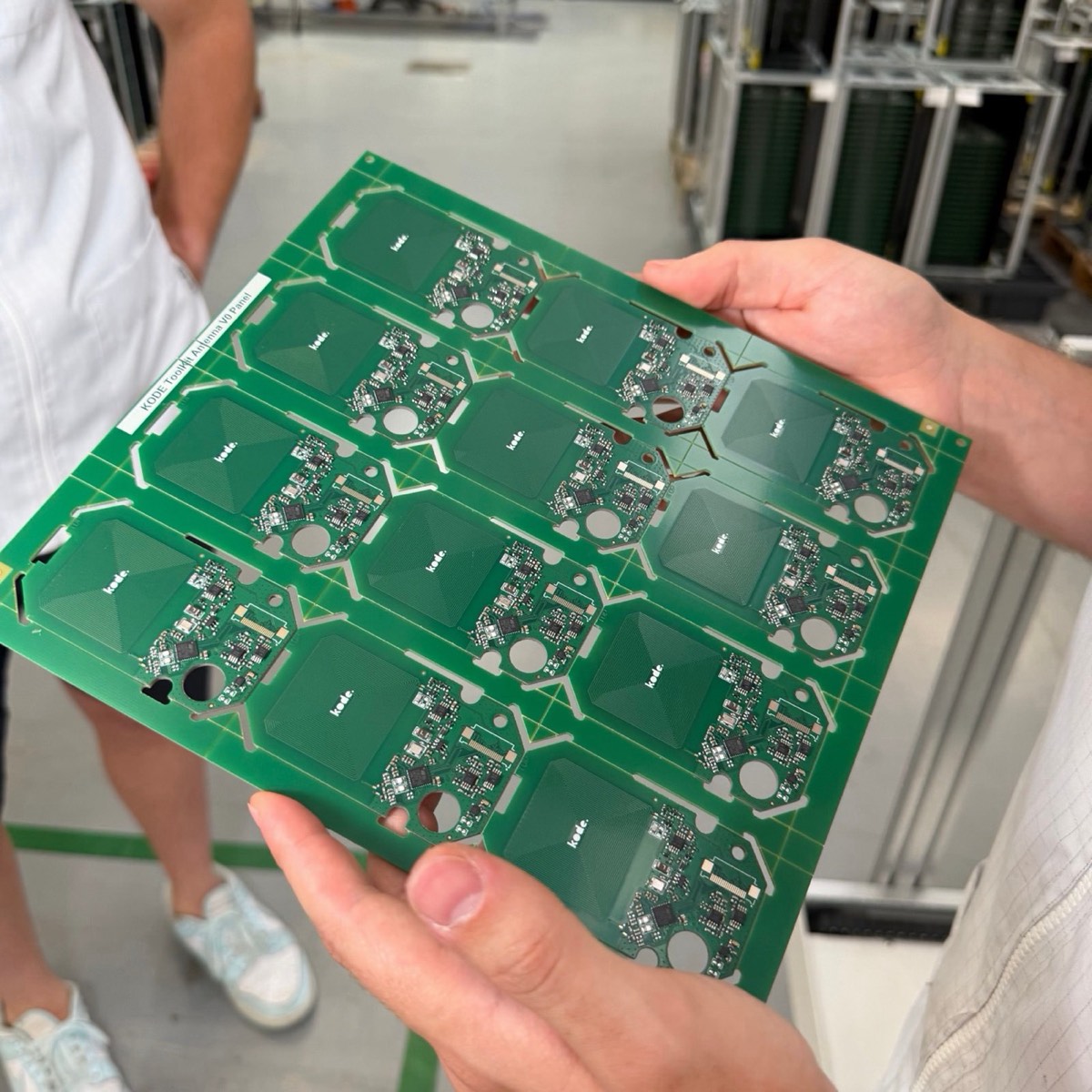
The bare boards came back from fabrication and assembly started right away. The Antenna PCB is fully soldered and in our hands, and the Main PCB goes through the line next.
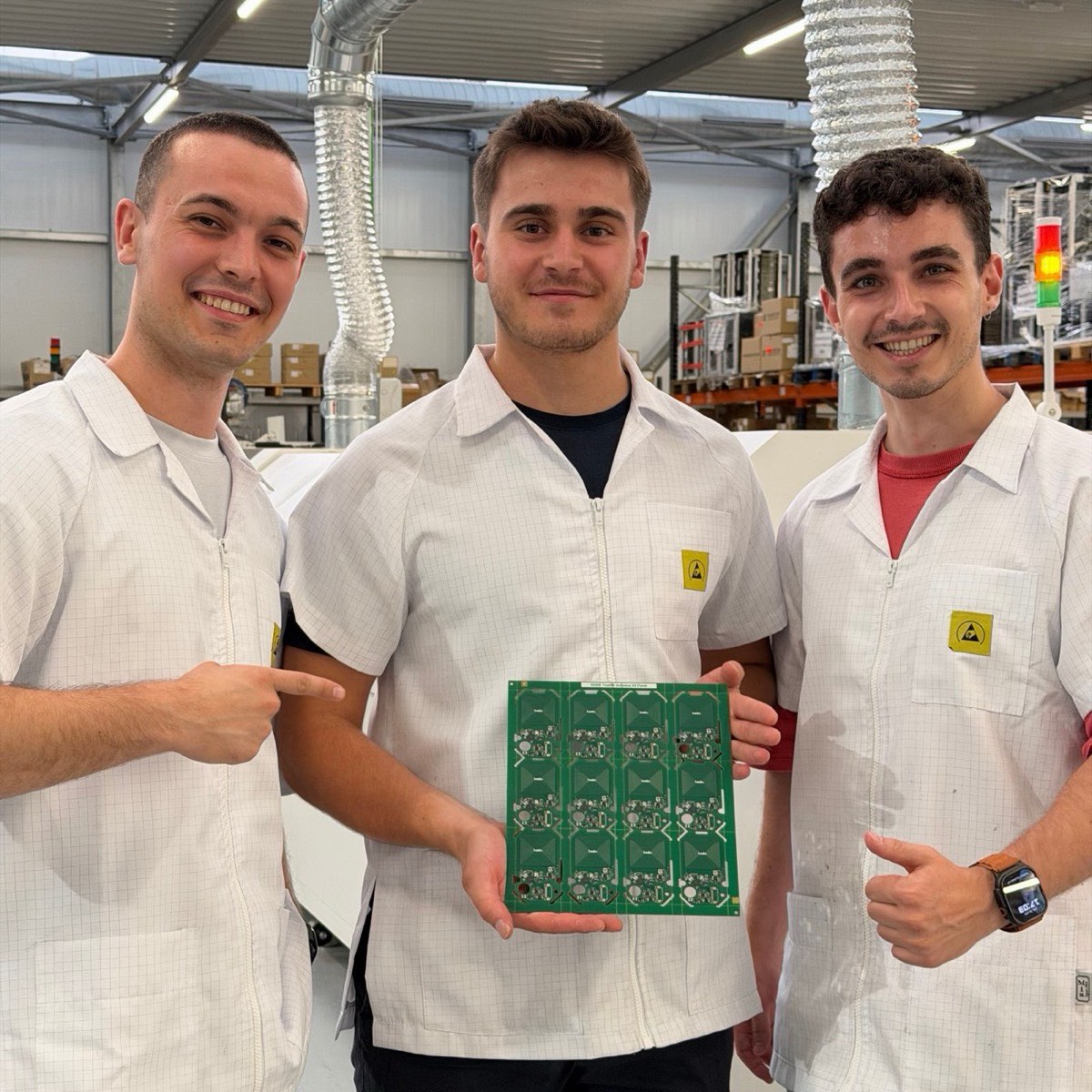
We wanted to show both boards finished at once, and we chose not to pretend: the main board needed a few more days on the line. So we promised our backers the follow-up either way, good or bad, because that is how we want to run this production.
That green panel is not one board, it is 12
We panelize the Antenna PCB in a 4x3 grid, so all 12 boards travel through the line together as a single sheet. The boards themselves are small, and an assembly line, solder paste printing, pick-and-place, reflow oven, is built to run standard-size panels rather than loose little PCBs.
Panelizing makes assembly faster and more reliable. At the end of the process the boards are cut apart, a step called depaneling, and each one goes on alone.
A visit to Flipper Devices
The same week brought a story we did not plan. We were in London for a basedcollective event, remembered at the airport that Flipper Devices has its HQ there, and sent a direct message to Pavlo Zhovner, the CEO of Flipper Devices. He told us to come by that Sunday.
Flipper has been one of our biggest inspirations for building Kode, and we had published a stack of videos putting the Kode Dot up against the Flipper Zero, so we walked in nervous. Instead we got a tour of their hackerspace and about three hours of conversation about how they started, how we started, and far too much geeky electronics.

What comes next
The Main PCB goes through the same line and comes back assembled. Then starts the part that decides everything: powering the boards up and proving that what we designed is what we built.
Every step done and every step ahead is public on our live roadmap at timeline.kode.diy. The Kode Dot is available for pre-order while production continues.
First shared with our backers in the Kickstarter update of June 24, 2026.