Product updateMay 27, 2026
From PCB Layout Lock to EVT Prototypes: How Kode Dot Hardware Gets Made
Kode Dot is a pocket-size, open-source device for makers, hackers and geeks: a handheld you can program, extend with modules and use to talk to the electronics around you. After a funded Kickstarter campaign, it is working its way through the stages that turn a design into a product you can hold.
This is the chapter of that story most projects never show in public: the weeks in May 2026 when the PCB layout got locked, both boards left for fabrication and the first EVT prototypes landed on the calendar. It is also the right moment to explain what EVT actually means, with our own dates instead of a textbook.
Layout locked May 13, both boards delivered by May 27
With the schematics complete since March, spring belonged to layout: placing every component of the production-version boards and routing every trace between them. That work had a hard date, and the layout was locked on Wednesday, May 13, 2026. Prototype fabrication was set to kick off from that same day.
Two weeks later, by May 27, both boards were fully designed: the main PCB and the antenna PCB, finished and handed to Versa Design, our electronics partner, who handles both fabrication and assembly of the prototype run. We had promised a look at the finished layout as soon as it existed. Here it is.
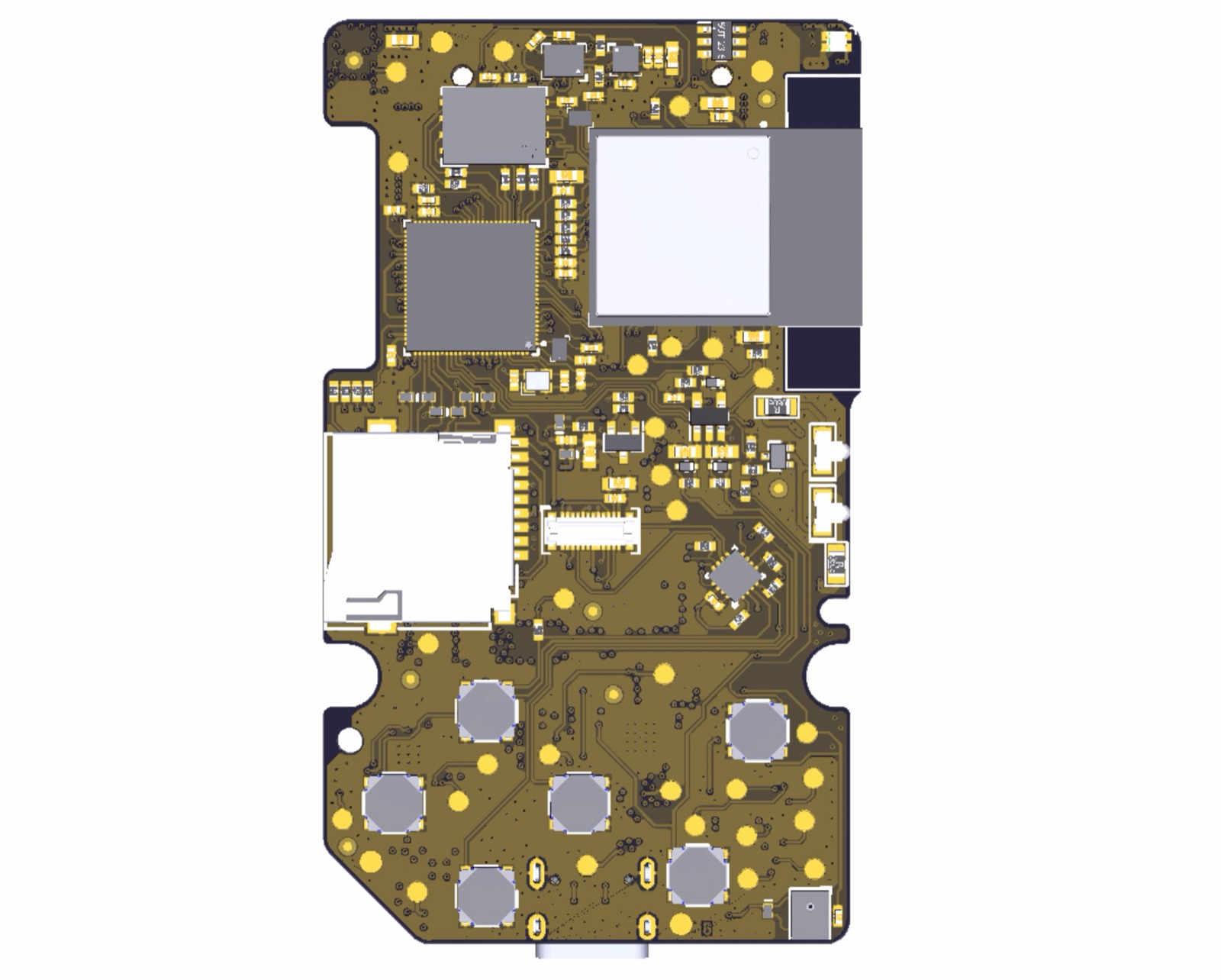
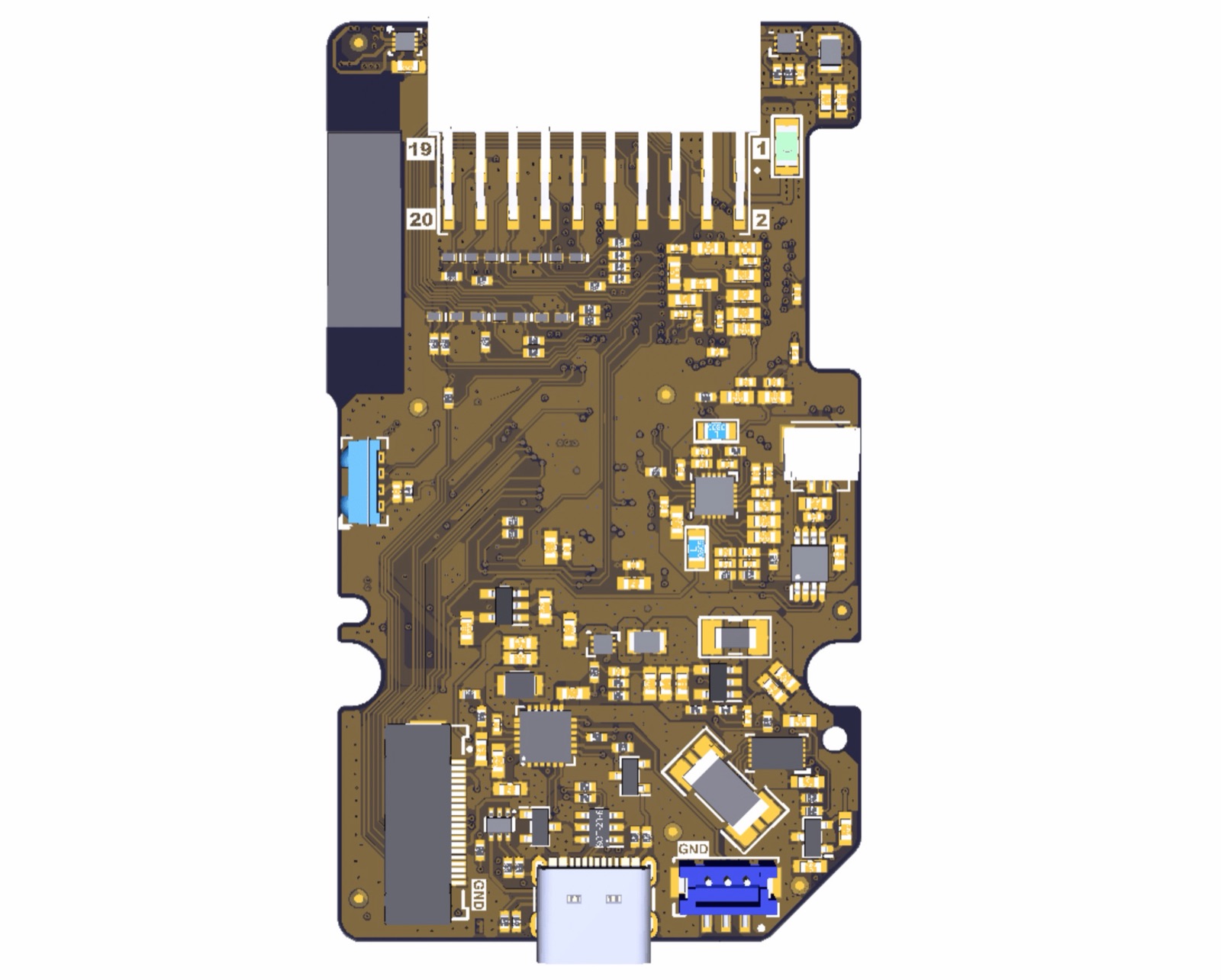
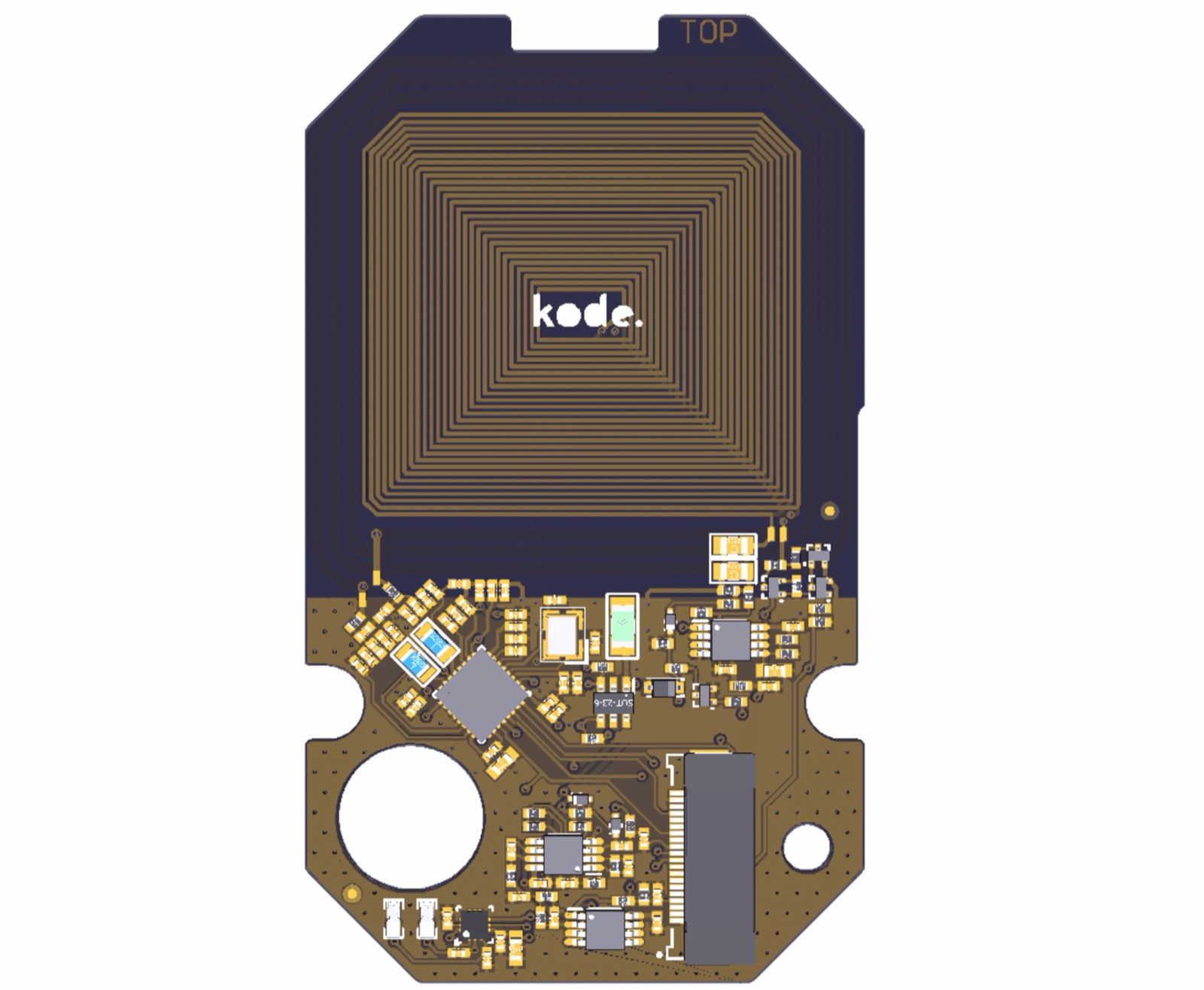
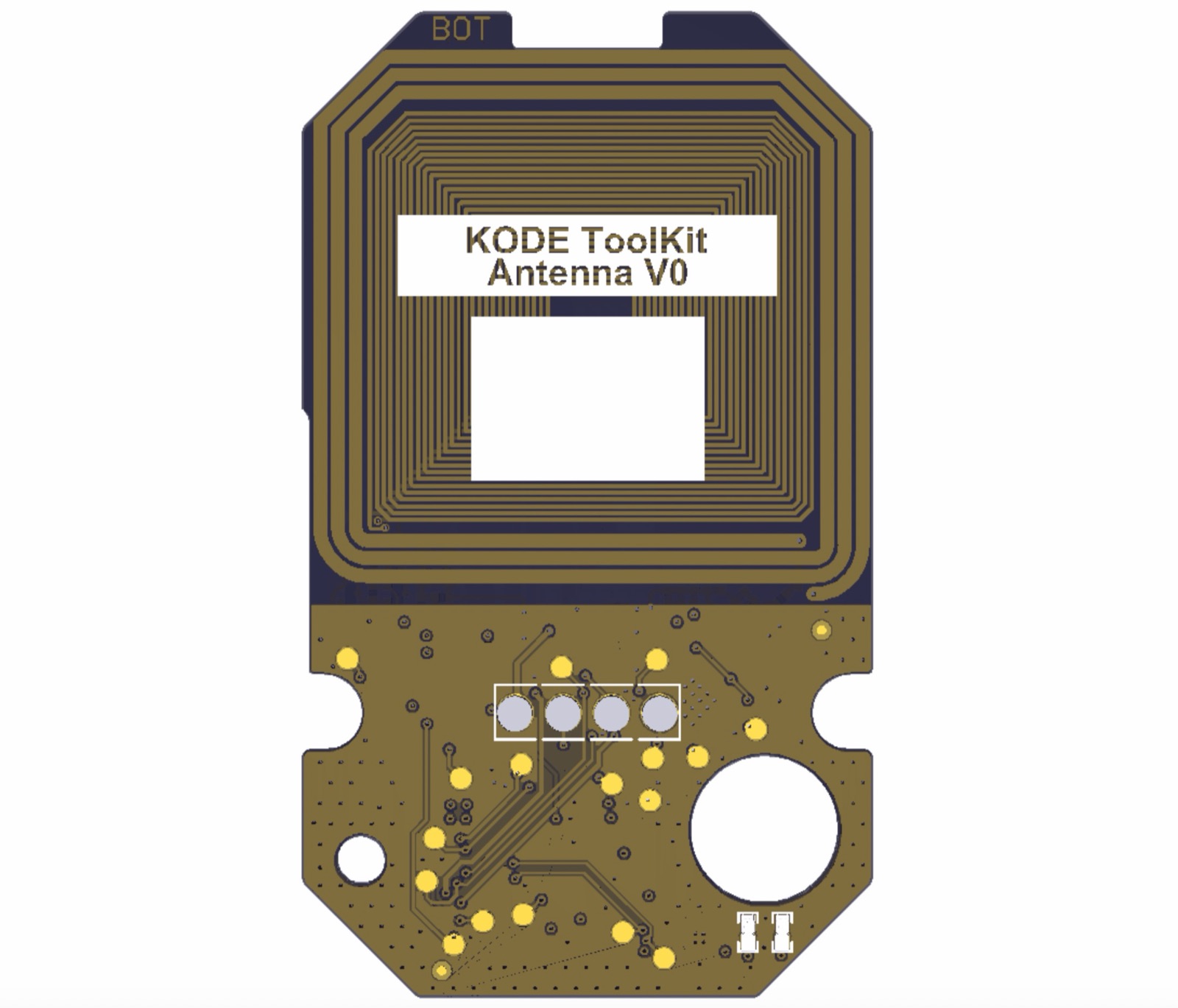
The second board is easy to underestimate on a spec sheet and very hard to design well: the antenna PCB, a dedicated board whose largest feature is a coil traced directly into the copper.
Why components get bought before the layout is locked
Here is a detail that sounds backwards until you have shipped hardware: Versa Design started buying components before the layout was locked.
It works because the bill of materials is decided by the schematic, not the layout. Layout decides where each part sits and how the traces run; it does not change which parts you need.
Some of those parts have lead times measured in weeks. Ordering them early means the slowest components are already traveling while the last traces are still being routed, instead of adding their delay after the lock. On a hardware schedule, those are weeks you never get back any other way.
What EVT actually means
The plan from the lock was simple to state. Versa Design fabricates and assembles the boards, the 3D-printed housings for the prototype units are produced in parallel, and by mid-June we sit down at our own bench to put together the first EVT prototypes.
EVT stands for Engineering Validation Test, the first of the three builds that stand between a locked design and mass production. EVT units are built from production-intent parts to answer one question: does the engineering work? DVT, Design Validation Test, then validates the complete product, enclosure and reliability included. PVT, Production Validation Test, is the final rehearsal, where the factory proves it can build the device at volume.
The housings are 3D printed at this stage for the same reason the batch is small: EVT exists to find problems while they are still cheap to fix. Injection molds are slow and expensive to change; a printed housing answers the fit questions now.
What the validation cycle is for
Once a working EVT is on the bench, the real validation cycle starts: bring-up, signal integrity, RF, thermal and mechanical. Each axis catches a different way a good-looking design can fail.
- Bring-up powers each block for the first time and proves it is alive.
- Signal integrity checks that fast buses still carry clean edges on the real copper, not just in simulation.
- RF measures the radios against the physical device, because plastic, copper and hands all detune antennas.
- Thermal maps where the heat goes when everything runs at once.
- Mechanical confirms that boards, battery, display and housing close into one solid unit.
On May 27 all of that was still ahead of us. We knew exactly what we would be measuring; we did not yet know what the boards would answer.
How this chapter ends
Because this is an archive of a story that kept moving, you can already read what happened next. The boards came back from fabrication and became the first assembled Kode Dot PCBs, and the validation cycle closed with both PCBs validated at 100%.
None of this stage is glamorous, and all of it is the point. The device that ships has to be the best one we can possibly build, and EVT is where that standard stops being a promise and starts being a measurement.
The Kode Dot is available for pre-order while production continues.
First shared with our backers in the Kickstarter update of May 6, 2026 and the Kickstarter update of May 27, 2026.